Showing posts with label literature. Show all posts

29 January 2024

Silences in the Homeric Odyssey

In the Odyssey, the following kind of thing is absolutely normal. For a regular novelist this scene would be a triumph. For Homer, it was Tuesday.

Silent silence

We’re in Odyssey book 16. Odysseus has been separated from his family for twenty years. He’s back, disguised as a beggar, doing some reconnaissance. At the moment he’s visiting with Eumaios, an enslaved herdsman. Suddenly, with no warning, his son Telemachos appears at the door. Odysseus hasn’t seen Telemachos since he was a baby.

[Odysseus] hadn’t finished speaking when his own son
stood at the front door. Surprised, the herdsman got up.
Out of his hands fell the bowls he was working with,
mixing glistening wine. Eumaios went straight to his lord,
kissed his head and his two bright eyes,
and both hands; and he burst into tears.

As when a father who loves his son greets him
returning home from a far-off land after ten years
separated from his only son, and he endured many labours for him,
so it was with the good swineherd and godlike Telemachos.

He poured kisses all over him, as if he had escaped death,
and weeping he spoke winged words to him:
‘You’ve come! Telemachos! Sweet light! I thought I’d never
see you again, after you sailed away to Pylos.
Come, come inside, dear son, so that I can
enjoy looking at you, you new arrival!’ . . .

To him thoughtful Telemachos spoke in turn:
‘Let’s do that, papa. It was for you that I came here,
so I could see you with my eyes and hear your words ...’

Odyssey 16.11–32

This is third-person narrative, not theatre. You can’t see where the characters are standing, their movements, their faces. They aren’t present in the way that an actor is.

So imagine, if you will, Odysseus’ face as he watches these things in silence.

As when a father who loves his son greets him ...

‘Come, come inside, dear son ...’

‘Let’s do that, papa. It was for you that I came here ...’

How’s he going to feel, hearing his long-lost son treating a slave as his father? We aren’t told. Presumably, if he has a reaction at all, he’s keeping it well hidden because he’s still in disguise.

Odysseus loses an awful lot of points for being a slave owner, but you can’t say he isn’t stoic.

Telemachus (Alan Stenson) refuses to believe Eumaeus (Tony Vogel) that Odysseus (Armand Assante) has returned. In this version there’s no silence at all, Telemachus and Eumaeus don’t address each other as ‘son’ and ‘father’, Eumaeus knows Odysseus’ true identity already and tells it to Telemachus straightaway. (The Odyssey, dir. Andrei Konchalovsky, 1997)

The question is, is he actually being stoic? Or is his reaction just glossed over, because it’s third-person narrative? Do we ignore Odysseus’ feelings because they aren’t mentioned, or do we imagine him staring fixedly at the others in agony, holding back tears?

Basically, what kind of silence is it?

Explicit silence

Here’s another scene where Odysseus maintains a stoic silence, concealing his emotion. But this time, it’s something we’re explicitly told. The storyteller directly mentions Odysseus’ reaction, and his silence. It’s the scene where Odysseus is recognised by his old dog, Argos.

And a dog lifted up his head and ears as he lay:
Argos, dog of enduring Odysseus, whom he himself
raised; but he didn’t get the benefit, for first he went away
to holy Ilion. Formerly young men used to lead him
after wild goats and deer and rabbits,
but by this time he lay unwanted, his lord absent,
on a pile of dung heaped in front of the gates
from asses and oxen, for slaves to take
to manure Odysseus’ great estate.
There the dog lay, Argos, covered in dog-ticks.
But then, when he recognised Odysseus was near,
he wagged his tail and pricked up his ears,
no longer able to come closer to his lord.

He looked at Argos from a distance, and wiped away a tear,
easily concealing it from Eumaios, then asked him out loud:
‘Eumaios, what an amazing sight, this dog lying on the dung. ...’

So he spoke, and went into the well built house
and walked straight to the hall with the noble suitors.
As for Argos, the fate of dark death took him,
as soon as he had seen Odysseus in the twentieth year.

Odyssey 17.291–305
Argos recognises Ulisse (Kirk Douglas). Again there’s no silence in this version: Ulisse speaks directly to Argos, and the two openly greet each other, thereby accidentally revealing Ulisse’s identity to his son Telemaco (Franco Interlenghi). (Ulisse, dir. Mario Camerini, 1954)

The focus is still firmly on what Odysseus is seeing, not on Odysseus himself. But we do get one line where he conceals a tear, and he makes a speech to conceal his emotion. This is one of the most memorable and moving scenes in Homer. And that’s partly because Argos’ and Odysseus’ reactions are so muted.

Muted, but not nearly as muted as in our first example. Here, the emotion is boiling under the surface. We’re shown glimpses.

There’s a similar effect in Odysseus’ late-night conversation with Penelope, his wife, in book 19. There too he hides his feelings, keeping up the pretence of being a beggar. It isn’t nearly as vivid as in the Argos scene, or as sudden as the Telemachos scene: Penelope and Odysseus have been communicating, or in each other’s presence, for some time. Still, we watch him hide his emotions as he watches her express hers.

None of this happens in the first scene we looked at, with Telemachos. There, if there’s an emotional scene at all, the emotion is purely in our imagination.

Concretised silence

The Polish philosopher Roman Ingarden coined a term for when a reader forms a firm mental picture of what’s going on in the world of a story: ‘concretisation’.

No author gives complete information about their world — not even Tolkien. As a result, concretisation comes partly from information that the story gives, partly from the reader’s inferences and imagination about things that the story doesn’t say.

If, for instance, the color of Consul Buddenbrook’s eyes were not mentioned in Buddenbrooks ..., then he would be completely undetermined in this respect. We know implicitly, through context and by the fact that he is a human being and has not lost his eyes, that his eyes are of some color; but we do not know which.
Ingarden 1973 [1937]: 50

The reader doesn’t need to pin everything down. No one cares about this character’s eye colour: it can stay indeterminate. That’s something the reader will just gloss over, elided as though it were filled in, but without actually filling it in.

Then there are will be areas where a reader will use their imagination a bit more. Some scholars love trying to reconstruct the layout of Odysseus’ hall, and where the doors are. Many readers of The Lord of the Rings will visualise an Aragorn that looks like Viggo Mortensen, even though the description of him in the book is fairly general.

Note. Sometimes the reader’s imagination may even contradict things that the book says — like imagining Frodo as a twenty-year-old, or imagining Sparrowhawk in Ursula LeGuin’s Earthsea stories as white — but there’s a sense in which that kind of concretisation is a mistake. Not bad reading, necessarily, because there are reasons for those concretisations, but still a mistake. Let’s not distract ourselves, though.

Odysseus’ and Argos’ emotion, in the book 17 scene, will be firmly concretised. It’s a vivid, memorable moment.

But in the Telemachos scene, in book 16, Odysseus’ silence may or may not be concretised. Some readers may simply not notice that it’s Odysseus’ first time seeing his son. Others may read between the lines and realise that Odysseus is going to have a strong reaction.

Delayed-effect silence

Here’s one more example, where a ‘silent silence’ — a silence where we aren’t even paying attention to Odysseus — suddenly turns into an explicit silence. It’s unconcretised at first, then the camera suddenly cuts to Odysseus, and his silence becomes concretised retroactively.

In book 18, the goddess Athena puts it into Penelope’s mind

to appear to the suitors, so as to open wide
the suitors’ minds, and so that she’d be honoured
all the more by her husband and son than she was before.
Odyssey 18.160–162

Athena makes her even more beautiful while she sleeps, then Penelope comes downstairs to the hall. The sight of her drives the suitors crazy. After some talking, she tells a story: when Odysseus departed twenty years ago, he told her

‘ “... But when you see that our son has grown a beard,
you must marry, whoever you wish, and leave your house.”
That’s what he told me: that’s what’s going to happen now. . . .
But a terrible pain comes over my heart and soul:
this wasn’t the custom for suitors in the old days
when they wanted to court, and compete with each other
for a noble woman and daughter of a rich man.
No, they’d bring oxen and rich sheep
as a feast for the girl’s family. They’d give precious gifts.
They didn’t eat someone else’s property unfairly.’
Odyssey 18.269–280

So she wants marriage-gifts, then she’ll obey her husband’s command and marry one of the suitors. For all a first-time reader knows, her plan may be to do exactly what she says.

How would Odysseus feel if he were to hear this? Would he feel disappointed? Betrayed? Would he sadly agree that she’s doing exactly what he asked?

Oh, wait, he does hear it. He’s right there. Keeping silent.

So she spoke. And long-suffering Odysseus laughed,
because she tricked gifts out of them. She flattered their hearts
with smooth words, but her mind intended something else.
Odyssey 18.281–283

Up to this point, his silent presence was very similar to the first scene we looked at. It was a ‘silent silence’. But now the scene is transformed, in a few words. The omniscient narrator had given no clues that Penelope was planning something other than what she said: it’s only Odysseus’ laugh that tells us how we’re supposed to interpret her words.

At this moment, where we suddenly concretise Odysseus’ reaction, we also concretise the entire episode and context — Penelope as trickster, the suitors as patsies, Odysseus’ and Penelope’s likemindedness.

Penelope (Greta Scacchi) comes face-to-face with a disguised Odysseus (Armand Assante). (The Odyssey, dir. Andrei Konchalovsky, 1997)

Silence isn’t just a tool for emotional effect, in other words. In Homer’s hands, it’s a storytelling tool.

And it’s a terribly sneaky tool. Consider this: when is the first time that Odysseus and Penelope interact in the Odyssey? It’s an interesting question because there’s a whole series of interactions before they ever have a conversation. Their interactions begin late in book 17, when Penelope three times asks people to invite the disguised stranger to come and speak to her (Odyssey 17.505–550); they don’t actually speak to one another until over 600 lines later (19.103 onwards).

That is, they never really meet for the first time. They’re insinuated into each other’s presence. It’s a quiet, subtle process.

Scholarship on Homeric silences

Siegfried Besslich (1966) has written an entire book on silences in the Odyssey. His focus is on dialogues: where one character ignores or omits to respond to something the other character says, or where a character stays silent while deciding what to say.

Egbert Bakker (1997: 86–122) looks at characters’ activity or inactivity in a scene in narratological terms, expanding on the work of Wallace Chafe. Characters who are directly participating in a scene are ‘active’, those who are not present are ‘inactive’, and there are intermediate ‘near-active’ and ‘semiactive’ states. Bakker’s focus is on how the narrator refers to characters in these states, and the wording associated with each state. A ‘silent silence’ of the kind we looked at here has no associated wording, though. The whole point is that it’s about a character not being mentioned..

A book chapter by myself (Gainsford 2001) looks at the way that Odysseus and Penelope are gradually inveigled into one another’s presence, and Homer’s use of elisions and backtracking to disguise the process.

References

  • Bakker, E. 1997. Poetry in speech. Orality and Homeric discourse. Ithaca (NY), London.
  • Besslich, S. 1966. Schweigen – verschweigen – übergehen. Die Darstellung des Unausgesprochenen in der Odyssee. Heidelberg.
  • Gainsford, P. 2001. ‘Cognition and type-scenes: the aoidos at work.’ In: Budelmann, F.; Michelakis, P. (eds.) Homer, tragedy, and beyond: studies in honour of P. E. Easterling. London. 3–21. [DOI]
  • Ingarden, R. 1973 [1937]. The cognition of the literary work of art. Tr. R.A. Crowley and K.R. Olson. Evanston (originally published as O poznawaniu dzieła literackiego, Lvov, 1937).

28 December 2023

How fragmentary ancient texts are reconstructed (sometimes)

There’s something almost magical about how papyrologists and editors take tiny scraps of ancient papyrus and turn them into coherent texts. Here’s an example taken from the Hesiodic Catalogue of women.

P. Turner 1

Here’s a passage as it stands in one ancient papyrus, Turner papyrus 1, lines 17–24:

  ]θεαιεξεγενον[
  ]τ̣υ̣ρωνκαιαμη . . ν̣ο̣ε̣ργ̣[
  ]ι̣γ̣μονεϲορχη̣ϲ̣[
  ]ρ̣ατονειδοϲεχ̣[
  ]χθηοϲθειοιο
      ]ηϲετακ[. .]τ̣ι̣ν̣
      ]τ̣ο̣π̣ω̣λ[.]ν
    ]ι̣δεαδιομηδην
P. Oxy. 2822, fr. 2

And here’s the same passage as it appears in Oxyrhynchus papyrus 2822 fr. 2, lines 1–8:

    ] . . ρει̣ . [
     ]νοσου[
    ]ητεϲτε[
   ]θοϲδεκ[
    ]ηνκαλλ[
     ]τωνι̣[
    ]χα̣ιονε . [
    ]ειϲε . [

There’s no overlap between these two fragments. The Turner fragment has the ends of each line, the Oxyrhynchus fragment has bits of the first part of each line.

And yet modern editors have worked out not just that these two fragments are the same passage, but also how to reconstruct the entire text!

ἐξ ὧν οὔρειαι Νύμφαι θεαὶ ἐξεγένοντο
καὶ γένος οὐτιδανῶν Σατύρων καὶ ἀμηχανοέργων
Κουρῆτές τε θεοὶ φιλοπαίγμονες ὀρχηστῆρες.
Ξοῦ]θος δὲ Κ[ρείουσαν ἐπή]ρατον εἶδος ἔχ[ουσαν
κούρ]ην καλλ[ιπάρηον Ἐρε]χθῆος θείοιο
ἀθανά]των ἰ[ότητι φίλην ποι]ήσατ' ἄκ[οι]τιν,
ἥ οἱ Ἀ]χαιὸν ἐγ[είνατ' Ἰάονά τε κλυ]τόπωλ[ο]ν
μιχθ]εῖσ' ἐν [φιλότητι καὶ εὐε]ιδέα Διομήδην.

From them were born mountain Nymphs, goddesses,
and the race of Satyrs, good-for-nothings and wastrels,
and the Kouretes gods, who love fun and dancing.
And Xouthos married Kreiousa, who possessed lovely beauty,
the beautiful-cheeked daughter of divine Erechtheus;
by the will of the gods he made her his own wife.
She bore to him Achaios and Ion, famed for horses,
having sex with (Xouthos); and also beautiful Diomede.

Catalogue fr. 10.17–24 ed. Most (my translation)
(= fr. 10(a) M-W)

And I’ll tell you right now that this reconstruction is absolutely accurate. (Well, mostly. I’m slightly doubtful about φίλην in the sixth line: we’ll come back to that.)

How on earth? What is this wizardry?

Step 1. Strabo

The key to joining the two papyrus fragments lay in an ancient book that has survived intact, Strabo’s Geography. Strabo survived by being transmitted via the mediaeval manuscript tradition.

And by good luck, Strabo happens to quote the first three lines of this passage in full.

Ἠσίοδος μὲν γὰρ ἐκ Δώρου καὶ τῆς Φορωνέως θυγατρὸς πέντε γενέσθαι θυγατέρας φησίν,

ἐξ ὧν οὔρειαι Νύμφαι θεαὶ ἐξεγένοντο,
καὶ γένος οὐτιδανῶν Σατύρων καὶ ἀμηχανοεργῶν
Κουρῆτές τε θεοὶ φιλοπαίγμονες, ὀρχηστῆρες.

For Hesiod says that five daughters were born from Doros and Phoroneus’ daughter:

From them were born mountain Nymphs, goddesses,
and the race of Satyrs, good-for-nothings and wastrels,
and the Kouretes gods, who love fun and dancing.
Strabo 10.3.19

By splicing together the two papyrus fragments and the Strabo quotation, we get the following:

ἐξ ὧν οὔρειαι Νύμφαι θεαὶ ἐξεγένοντο
καὶ γένος οὐτιδανῶν Σατύρων καὶ ἀμηχανοέργων
Κουρῆτές τε θεοὶ φιλοπαίγμονες ὀρχηστῆρες.
   ]θοϲδεκ[. . . . . . . . . .]ρ̣ατονειδοϲεχ̣[
    ]ηνκαλλ[. . . . . . . . .]χθηοϲθειοιο
     ]τωνι̣[. . . . . . . . . . .]ηϲετακ[. .]τ̣ι̣ν̣
    ]χα̣ιονε . [. . . . . . . . . . . .]τ̣ο̣π̣ω̣λ[.]ν
    ]ειϲε . [. . . . . . . . . . . .]ι̣δεαδιομηδην

But remember, editors have reconstructed the entire passage. We’ve still got a way to go.

Step 2. Word breaks, punctuation

Ancient books didn’t have word spaces, and they usually didn’t have punctuation. Actual papyrologists probably don’t really need to go adding them in for their own reading, because they’re used to how text looks in ancient copies. But it’ll still be helpful to put them in here, to show that some of the word breaks are pretty obvious to anyone who knows the language. In a couple of places, some common words and names that go over the edge of the papyrus are also easy to fill in.

ἐξ ὧν οὔρειαι Νύμφαι θεαὶ ἐξεγένοντο
καὶ γένος οὐτιδανῶν Σατύρων καὶ ἀμηχανοέργων
Κουρῆτές τε θεοὶ φιλοπαίγμονες ὀρχηστῆρες.
   -]θοϲ δὲ κ[-. . . . . . . . . .-]ρ̣ατον εἶδος ἐχ̣[-
    -]ην καλλ[- . . . . . . . .-]χθῆος θείοιο
     -]των ι̣[-. . . . . . . . . . .-]ηϲετ’ ἄκ̣[οι]τ̣ι̣ν̣
   Ἀ]χα̣ιὸν ἐγ̣[-. . . . . . . . . . . .]τ̣ο̣π̣ω̣λ[.]ν
    ]ειϲε . [. . . . . . . . . . . .-]ι̣δεα Διομήδην

Step 3. Know your mythology

Thanks to Strabo, we already know that the passage is talking about Satyrs and goddesses. We’ve also already filled in the name ‘Achaios’ in line 7, and we’ve got Diomede in line 8. If you know your Greek mythology, or if you look it up, you know that Achaios and Diomede are brother and sister, and that they have a brother Ion. We can see the passage is talking about family — line 6 has the word ἄκοιτιν, ‘wife’.

Achaios, Ion, and Diomede are the children of Xouthos and Kreiousa. It so happens that line 4 gives us the snippet

-]θοϲ δὲ κ[-

which could very easily read ‘and (Xou)thos something something K(reiousa)’. It’ll be something like ‘Xouthos married Kreiousa’, so Kreiousa will be in the accusative case,

Ξοῦ]θος δὲ Κ[ρείουσαν

The end of line 6, with the word ‘wife’, will be the bit telling us that ‘he made her his wife’:

ποι]ήσατ’ ἄκ̣[οι]τ̣ι̣ν̣

(There’s a small emendation here: the papyrus reads -ηϲετ’, which is very obviously a verb ending. -ετο is a common verb ending, but in the first aorist, -ετο becomes -ατο. Modern students learning ancient Greek make the same kind of mistake all the time. I find it strange that no critical edition reports the reading that’s clearly visible on the papyrus, though, even if just to correct the error.)

In addition we know Kreiousa is the daughter of Erechtheus. It’s hard to think of any names other than ‘Erechtheus’ that could fit the end of line 5, ]χθῆος θείοιο, so that gives us ‘daughter of divine Erechtheus’:

κούρ]ην καλλ[-. . . . . . Ἐρε]χθῆος θείοιο

beautiful (something something) daughter of divine Erechtheus

These family links also allow us to fill in one more thing: if Xouthos and Kreiousa are having children, they’re going to have to have sex, and hexameter poetry isn’t shy about mentioning that. The last line is likely to mean something along the lines of ‘she had sex with him and gave birth to Diomede’:

μιχθ]εῖσ' ἐ-. [

where μιχθεῖσα means ‘(she) having had sex’.

Put all of these additions together and we get

ἐξ ὧν οὔρειαι Νύμφαι θεαὶ ἐξεγένοντο
καὶ γένος οὐτιδανῶν Σατύρων καὶ ἀμηχανοέργων
Κουρῆτές τε θεοὶ φιλοπαίγμονες ὀρχηστῆρες.
Ξοῦ]θος δὲ Κ[ρείουσαν . .-]ρ̣ατον εἶδος ἐχ̣[-
κούρ]ην καλλ[-. . . . . . Ἐρε]χθῆος θείοιο
     -]των ι̣[-. . . . . . . . . ποι]ήσατ’ ἄκ̣[οι]τ̣ι̣ν̣
   Ἀ]χα̣ιὸν ἐγ̣[-. . . . . . . . . . . .]τ̣ο̣π̣ω̣λ[.]ν
μιχθ]εῖσ' ἐ-. [. . . . . . . . . . . .-]ι̣δεα Διομήδην

Step 4. Metre and metrical formulas

This particular passage is outstandingly lucky. It’s very rare that there are so many ways of filling in gaps. Most papyri don’t overlap with one another or with surviving texts, have no mythological content, and aren’t in verse. This one really won the lottery.

Because poetic rhythm and poetic devices are also here to help us out. Metrical formulas are one type of building block that early hexameter poets used to construct their poetry. If a modern editor knows their way around the formulaic system, they can use these building blocks too.

For example, take the partial phrase in line 4, εἶδος ἐχ̣[, where the second word is going to be a form of the verb ἔχω: ‘possessing beauty’. If you do a simple search of extant hexameter poetry for the string ειδος εχ-, you’ll find the following lines (not counting the fragment we’re looking at):

Ἑρμιόνην ἣ εἶδος ἔχε χρυσῆς Ἀφροδίτης
Ὠκεανοῦ κούρη πολυήρατον εἶδος ἔχουσα
Δήμητρ' ἠύκομον, πολυήρατον εἶδος ἔχουσαν
ἀθανάτην βασίλειαν, ὑπείροχον εἶδος ἔχουσαν
ἐκπρεπὲς εἶδος ἔχουσαν ἐν ἀθανάτοισι θεοῖσι
               ]..ν πολυήρατον εἶδος ἔχουσ[αν]
γείνατο δ' Ἰφιάνειραν ἐπήρατον εἶδος ἔχουσα[ν]
Sources: Odyssey 4.14; Theogony 908; Hymn to Demeter 315; Hymn 12 (to Hera) 2; Hymn 32 (to Selene) 16; Catalogue fr. 13.7 ed. Most; Catalogue fr. 25.39 ed. Most.

Next notice that the papyrus has the letters -ατον before the word εἶδος. Four of these results have an exact match for that, too.

The upshot is that what we’ve got in line 4 of our passage is a formulaic phrase. It’s attested in the forms πολυήρατον εἶδος ἔχουσα, πολυήρατον εἶδος ἔχουσαν, and ἐπήρατον εἶδος ἔχουσαν. The poet chooses the variant based on metrical and syntactical context: ἔχουσα when the woman who ‘possesses beauty’ is in the nominative case, ἔχουσαν when she’s accusative; πολυήρατον after a penthemimeral caesura, ἐπήρατον after a tritotrochaic caesura. (If you want an explanation of these terms, see here from earlier this year.)

Ξοῦθος δὲ Κρείουσαν has (a) Kreiousa in the accusative case, and (b) a tritotrochaic caesura. So we can reconstruct the line very confidently:

Ξοῦ]θος δὲ Κ[ρείουσαν ἐπή]ρατον εἶδος ἔχ[ουσαν

Similar considerations apply in line 5. After κούρ]ην, there are only a few words and phrases starting καλλ- that could sensibly fit before Ἐρε]χθῆος. Some formulaic words are disqualified because they can only start in the second half of a foot (καλλιπλόκαμον, καλλίσφυρον, καλλίζωνον); another is ruled out because hexameter poetry always uses it to describe horses (καλλίτριχον). The reconstruction Ἐρε]χθῆος means we’re looking for a tritotrochaic caesura, so that rules out καλλίστην and καλλίκομον. κάλλεος εἵνεκα is too long.

Ruling out all of those narrows our choices down to one: καλλιπάρηον, ‘beautiful-cheeked’. καλλιπάρηον also happens to be the right length, in terms of number of letters, to occupy the space between the two parts of the line. So the correct supplementation of line 5 is

κούρην καλλ[ιπάρηον Ἐρε]χθῆος θείοιο

the beautiful-cheeked daughter of divine Erechtheus

And we do this for the rest of the passage. In line 7, ‘she gave birth to Achaios’ is going to mean supplementing Ἀ]χαιὸν ἐγ[είνατ(ο); that leaves exactly the right amount of space for Achaios’ brother, Ion, in the accusative form Ἰάονα. At the end of the line, κλυτόπωλος is an adjective that standardly appears at line-end (3× in the Iliad). In line 8, μιχθεῖσ' ἐν φιλότητι is standard formulaic phrasing for ‘after having sex’ (4× in the Theogony, 1× in the Hymns, 4× elsewhere in the Catalogue). εὐειδέα appears a few times elsewhere.

The only bit where I have doubts is the first half of line 6: ἀθανά]των ἰ[ότητι φίλην, according to the editions of Merkelbach and West (1990), Hirschberger (2004), and Most (2007). The formulaic adjective to use before ποιήσατ' ἄκοιτιν would be θαλερήν, not φίλην (θαλερὴν ποιήσατ' ἄκοιτιν: 4× Theogony, 5× elsewhere in the Catalogue, 1× in the Megalai Ehoiai). That is in fact how some scholars have supplemented the line.

However, θαλερήν doesn’t fit West’s reconstruction of the first part of the line, ἀθανά]των ἰ[ότητι. And Hirschberger’s commentary points out that Iliad 9.397 uses φίλην ποιήσομ' άκοιτιν (‘I shall make (her) my own wife’). I think there’s still room for doubt: I can just about imagine the line going

κούρ]ην καλλ[ιπάρηον Ἐρε]χθῆος θείοιο
ἀθανά]των ἴ[σου θαλερὴν ποι]ήσατ' ἄκ[οι]τιν

the beautiful-cheeked daughter of divine Erechtheus,
equal of the gods; he made her his fruitful wife.

It’s a little strange to expand on Erechtheus like that when he’s only being mentioned in passing. I’m prepared to accept that West’s reconstruction is the more likely — but it’s the one phrase in this passage that is not quite certain.


And there we have it — a complete passage. Like I said, this passage is unusually fortunate in having so many clues that allow us to reconstruct it. It may look like papyrologists are sorcerors.

Actually on reflection I guess they are pretty much sorcerors. But it’s the mechanical kind of sorcery! It isn’t like Doctor Strange doing any random magic that the writers happen to think of. It’s more like Dungeons & Dragons magic, with strict rules.

Sources

  • Hirschberger, M. 2004. Gynaikōn Katalogos und Megalai Ehoiai. Ein Kommentar zu den Fragmenten zweier hesiodeischer Epen. Munich/Leipzig.
  • Lobel, E. 1971. The Oxyrhynchus papyri vol. 37. London. [Internet Archive]
  • Merkelbach, R.; West, M. L. 1990. ‘Fragmenta selecta.’ In: Solmsen, F. (ed.) Hesiodi Theogonia Opera et dies Scutum, 3rd ed. Oxford. 109–246.
  • Most, G. W. 2007. Hesiod. The Shield, Catalogue of women, other fragments. Cambridge (MA)/London.

02 November 2023

Who has the highest K/D in the Iliad?

You’d imagine the answer would be Achilleus, right? Actually he’s only number three. Remember, he’s out of combat for most of the epic.

Now, I do have to apply some constraints, otherwise this won’t make sense.

First, people don’t get to respawn in the Iliad. (Well, mostly. I’ll come back to this.) So we’re not really talking about K/D, it’s really just K. Only a handful of characters get combat kills and also die: Patroklos, Sarpedon, Hektor, and a few minor characters (Antiphos, Peiros, possibly Akamas). For everyone else, the K/D involves a divide-by-zero error. But many online games calculate K/D as if everyone died at least once, so that’s the principle I’ll adopt.

Second, only named kills count. Unnamed characters don’t get reported individually: it’s impossible to keep a tally when the narrator says something like ‘And then Achilleus killed a countless throng’.

My tally is different from others that I’ve seen, by C. B. Armstrong (1969) and an anonymous user on the ‘ancient Greek’ subreddit (2021) — Armstrong and I have the same count for the top two people on the league table, but our counts differ for number three. Alas, there’s little prospect of reconciling the numbers without everyone sharing their data. So to that end, my own tally is online here. It probably contains errors. I’m sure you’ll tell me.

Here’s the overall kill count by book. Throughout this write-up, green represents Greeks killing Trojans, tan represents Trojans killing Greeks. (Do let me know if this is a poor choice for colour blindness: they were meant to be paler versions of the colours used on Loeb editions.)

Deaths of named characters in the Iliad

Most named deaths are Greeks killing Trojans. The highest densities of Trojans killing Greeks are in book 5 (Diomedes’ aristeia), 11 (Agamemnon’s aristeia), and 15 (the battle by the ships).

In the aristeiai, I get the general sense that the high Greek death counts are there for narrative balance. In book 5, Diomedes starts strong, but while his rampage continues throughout the book, the narrative focus moves around after the first 300 lines. From lines 541 to 659 there’s a mess of deaths on both sides, then Odysseus slaughters seven Trojans in two lines, then Hektor kills seven Greeks. Book 11 also adjusts its focus as it goes: Agamemnon gets a bunch of kills, then Hektor, then Diomedes and Odysseus, then Aias.

That balancing principle doesn’t apply in the aristeiai of Patroklos (book 16) and Achilleus (books 20–21). There, the whole point is that the fighting is not balanced. The vast majority of kills in those books are by Greeks, mostly Patroklos and Achilleus. The only Trojan kills are in book 16, where Hektor and Glaucus get one kill each at lines 569–600; and of course Hektor kills Patroklos at the end of the book.

The standings

Here are the top twenty.

Rank Player Team Kills
1 Hektor Trojan 28
2 Patroklos Achaian 27
3 Achilleus Achilleus 24
4 Diomedes Achaian 21
5 Odysseus Achaian 18
6= Aias Telamonios Achaian 15
6= Teukros Achaian 15
8 Agamemnon Achaian 12
9= Antilochos Achaian 8
9= Menelaos Achaian 8
11= Aineias Trojan 6
11= Idomeneus Achaian 6
11= Meriones Achaian 6
14 Leonteus Achaian 5
15= Euryalos Achaian 4
15= Polypoites Achaian 4
17= Eurypylos Achaian 3
17= Meges Achaian 3
17= Paris Trojan 3
17= Poulydamas Trojan 3

Two Achaians and four Trojans have 2 kills each. Five Achaians and six Trojans have 1 kill — including the god Ares, who gets a kill of his own at 5.842–844 (unless you want to count that as just teabagging). The lesser Aias, Sarpedon, and Glaukos get 2 each; Helenos gets 1. Nestor is the only major combatant with no kills.

Respawning

But I also get irritated whenever good Homer nods.
Horace, Art of poetry 358–359

The classic example of the ‘Homeric nod’ is when a character gets killed and then pops up alive later on. Wikipedia, in its article on continuity in narrative, gives the example of the Paphlagonian leader Pylaimenes. He dies in Iliad 5, then respawns in book 13 to witness his son’s death.

There the two of them killed Pylaimenes, equal of Ares,
leader of the Paphlagonians, great-hearted and shield-wearing.
Atreus’ son, spear-famous Menelaos, got him
as he stood there, hitting him at the collarbone with his spear.
Iliad 5.576–579
Then noble Pylaimenes’ son sprang upon him,
Harpalion, who followed his own father into to make war
at Troy — but he didn’t come back home to his ancestral land.
. . .
... he breathed out his life, like an earthworm along the ground
lying down; his dark blood flowed out and soaked the earth.
The great-hearted Paphlagonians tended to him,
placed him in a chariot, and led him to holy Ilion
grieving. And with them walked his father, dripping tears.
There was no blood price for his dead son.
Iliad 13.643–645, 654–659

We can be sure it’s the same Pylaimenes both times, thanks to the references to the Paphlagonians. It shows it isn’t a stock name. Many names in Iliad death scenes are stock names, like the names in these lines —

Which of the Trojans did blameless Teukros slay first?
First Orsilochos, and Ormenos, and Ophelestes,
Daitor, Chromios and godlike Lykophantes,
and Polyaimonides, Amopaon, and Melanippos.
Iliad 8.273–276

Most of these names get repeated elsewhere. Orsilochos had already been killed at 5.541–553, Ormenos dies again at 12.187, Ophelestes at 21.210. Chromios has many appearances, at 4.295 as an Achaian, at 5.160 as a son of Priam killed by Diomedes, at 5.677 as a Trojan slain by Odysseus, here as a Trojan, and in book 17 as another (living) Trojan mentioned at lines 218, 494, and 534. Various Melanipposes appear elsewhere too.

I suppose you could say that Chromios doesn’t just respawn. He also team-hops.

But really, they’re stock names of course. One way of telling that a name is a stock name is if it also crops up in the ‘pair of brothers killed’ trope. What I mean by that is a common trope where the narrator gives a death scene pathos by telling us about what a tragedy it is that both brothers die, to the grief of their dear old father.

Here are the examples of the ‘pairs of brothers killed’ trope. They account for 9.9% of all named kills in the Iliad.

Passage Killer(s) Two brothers
killed
Brothers’
parent(s)
5.148–151 Diomedes Abas, Polyidos Eurydamas
5.152–158 Diomedes Xanthos, Thoon Phainops
5.159–165 Diomedes Echemnon, Chromios Priam
5.541–560 Aineias Krethon, Orsilochos Diokles
6.21–28 Euryalos Aisepos, Pedasos Abarbare,
Boukolion
11.101–121 Agamemnon Isos, Antiphos Priam
11.122–147 Agamemnon Peisandros,
Hippolochos
Antimachos
11.221–263 Agamemnon Iphidamas, Koon Antenor
11.328–334 Diomedes Adrestos, Amphios
(named at 2.830–834)
Merops
11.426–455 Odysseus Charops, Sokos Hippasos
16.317–329 Antilochos,
Thrasymedes
Atymnios, Maris Amisodaros
20.460–462 Achilleus Dardanos, Laogonos Bias

Most of these must be stock names. So there’s no good reason to see a continuity error when people with one of these names get killed and reappear later.

Still, for the record, here’s the list of names that get killed multiple times. Note that these aren’t necessarily Homeric nods: there’s no in-universe reason to suppose that it’s the same character each time. Rather, these are typical names for death scenes.

Name First death Second death Third death
Adrestos 6.65 (major scene) 16.694
Agelaos 8.259 11.302
Akamas 6.8 16.343
Apisaon 11.578 17.349
Autonoos 11.301 16.694
Chromios 5.160 5.677 8.275
Dolops 11.302 15.543
Echeklos 16.694 10.477
Echios 15.339 16.416
Erymas 16.349 16.415
Hippodamas 11.335 20.402
Hypsenor 5.81 13.412
Koiranos 5.677 17.618
Laogonos 16.606 20.462
Melanippos 8.276 15.577 16.695
Moulios 16.696 20.473
Mydon 5.588 21.209
Oinomaos 5.706 13.508
Ophelestes 8.274 21.210
Opheltios 6.20 11.302
Orestes 5.705 12.193
Ormenos 8.274 12.187
Orsilochos 5.560 8.274
Peisandros 11.144 13.617
Periphetes 14.515 15.650
Schedios 15.515 17.310
Thoon 5.155 11.422 13.547
Tlepolemos 5.658 (major scene) 16.416

A few of these show notable patterns in the identity of the killers. Echeklos’ and Moulios’ deaths are both at the hands of Patroklos first, and Achilleus second; Peisandros gets killed first by Agamemnon, later by Menelaos; Hippodamas is killed by Odysseus, then Achilleus, maybe hinting at OdysseyIliad parallels. Schedios is killed by Hektor both times.

Perhaps the most suggestive ones are the ones that have non-Greek names. Apisaon’s two death scenes are formulaic (11.578–579 = 17.348–349), with the result that he dies the same way twice, with a spear in the liver. Erymas’ two death scenes are in quick succession. But I wonder if fact that their names are non-Greek suggests that they’re less formulaic. Are they meant to be more memorable than the typical Greek names? If so, what would that imply?

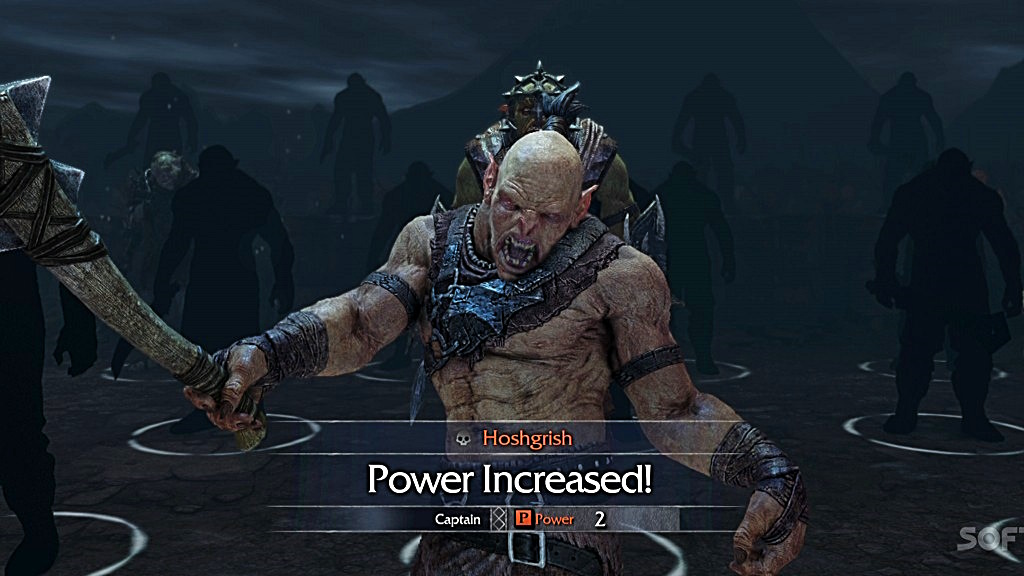
Is Chromios a respawning Orc nemesis? (Middle Earth: shadow of Mordor, 2014)

Armstrong highlights the characters that die three times: Chromios, Melanippos, and Thoon. The many appearances of Chromios, in particular, make me wonder if the Iliad has a Nemesis System, where a character who dies may reappear stronger and buffed up, ready to take vengeance (Magnusson et al. 2022). Or maybe they’re the ones who acquire a new Nemesis each time they respawn. As Armstrong puts it,

With such adversaries it is scarcely surprising that they were finally disposed of.
Armstrong 1969: 31

References

  • Armstrong, C. B. 1969. ‘The casualty lists in the Trojan War.’ Greece & Rome 16.1: 30–31. [DOI | JSTOR]
  • Gainsford, P. 2023. ‘Iliad deaths.’ Online dataset. [Google Sheets]
  • Magnusson, S.; Hage, E.; Parosu, I. 2022. ‘The Nemesis System. How games create stories.’ Diss. Uppsala. [Digitala Vetenskapliga Arkivet]
  • /u/rebelzephyr 2021. ‘Iliad K/D ratio.’ Online forum post. [Reddit]

30 October 2023

Who is the hero of the Iliad?

Every now and then an article about Homer pops up in my alerts and I’ll see if it’s worth sharing. This one isn’t. But maybe it’s a teaching opportunity. It’s a short piece about Achilles and Hector at The imaginative conservative, by Joseph Pearce, a writer and editor attached to a Catholic college in New Hampshire.

Worshippers at the altar of ‘western civilisation’ have to put in many hours denying that early Greek literature shows influence from Anatolia and Mesopotamia, or avoiding thinking about non-binary gender representation in the Odyssey. Today’s deflection is about Hector in the Iliad.

Hector, says Pearce, is the very model of a modern hero. He’s admirable, he has noble qualities, he protects and defends his family. He, not Achilles, is the ‘hero’ of the Iliad. Achilles is only a hero for ‘neopagan or atheist humanist readers’.

If you’ve read the Iliad, you’ll already know this is nonsense. It seems as if Pearce relies a little too heavily on Hollywood for his knowledge of Homer.

Hector genuinely does fight Achilles to protect his kin — in this version of the story. (Eric Bana as Hector, Brad Pitt as Achilles; Troy, 2004, dir. W. Petersen)

Hector may be a tragic figure, as Redfield has argued (1975). Some readers may even find him sympathetic. But he’s also obstinate, rude, and easily swayed by pride. He can’t take advice from others, he always has to be told where he’s needed, and most of all, he intentionally and wilfully chooses destruction, solely to save face.

Here’s what Pearce claims.

The Iliad begins with Achilles’ refusal to serve as a protector and defender of his own people, casting him in the role of an anti-hero, and ends with the heroic death and subsequent eulogizing of one who had laid down his life as a defender and protector of his wife, child and people.
Pearce 2023

And, for the record, here’s one of those ‘eulogies’, spoken by Andromache.

My husband, you were lost young from life, and have left me
a widow in your house, and the boy is only a baby
who was born to you and me, the unhappy. I think he will never
come of age, for before then head to heel this city
will be sacked, for you, its defender, are gone, you who guarded
the city, and the grave wives, and the innocent children,
wives who before long must go away in the hollow ships,
and among them I shall also go, and you, my child, follow
where I go, and there do much hard work that is unworthy
of you, drudgery for a hard master; or else some Achaian
will take you by hand and hurl you from the tower into horrible
death, in anger because Hektor once killed his brother,
or his father, or his son; there were so many Achaians
whose teeth bit the vast earth, beaten down by the hands of Hektor.
Your father was no merciful man in the horror of battle.
Iliad 24.725–729 (tr. Lattimore)

Hector did protect her in the past. But now he has left her high and dry: the Trojans have no defender or protector. Hector has consigned his wife, son, parents, and compatriots to murder, violence, and enslavement.

And make no mistake, this isn’t because Hector made a noble effort but failed. It’s absolutely and precisely his own choice. His parents beg him at length to withdraw to safety, to live and fight another day. His father Priam specifically points out to Hector that if he chooses to fight Achilles then his father’s corpse will be mutilated by dogs, his brothers killed, their wives raped, their babies dashed to the ground (Iliad 22.56–76). His mother begs him to continue defending Troy from inside the walls (Iliad 22.84–85).

But Hector is obstinate. (As he routinely is.) He’s fully aware of the consequences of his choice, but he chooses it anyway, because he can’t bear the prospect of someone else pointing out his mistakes.

So these two in tears ahd with much supplication called out
to their dear son, but could not move the spirit in Hektor ...
Deeply troubled he spoke to his own great-hearted spirit:
‘Ah me! If I go now inside the wall and the gateway,
Poulydamas will be first to put a reproach upon me,
since he tried to make me lead the Trojans inside the city
on that accursed night when brilliant Achilleus rose up,
and I would not obey him, but that would have been far better.
Now, since by my own recklessness I have ruined my people
I feel shame before the Trojans ...’
Iliad 22.90–91, 98–105 (tr. Lattimore)

This isn’t a ‘heroic death’. He’s a narcissist. Rather than get blamed for some deaths, he’d prefer that everyone die.

Mind, this isn’t to say Achilles is a saint. Pearce is right to point out his betrayal of the Greeks. But Pearce genuinely seems to believe that one of them has to be ‘the hero’ — that a reader has to choose between them. One of them has to be the good guy.

If you take a class on the Iliad, one of the first things covered is to avoid that kind of puerility. They’re all awful people — in all senses of the word. Homeric heroes aren’t people who are good, they’re people who have an extraordinary impact on those around them. They’re larger than life. They’re powerful enough that they don’t need to care what you think of them.

Hector and Achilles as depicted in Doctor Who, ‘The myth makers’ (1965): Hector (Alan Haywood, facing camera) as musclebound thug, Achilles (Cavan Kendall) as artful dodger.

Here’s another teaching moment. This time it’s about linguistics. Pearce puts a lot of weight on the linguistic origins of the word ‘hero’.

Etymologically, the Greek hḗrōs means ‘protector’ or ‘defender’.
Pearce 2023

Much of his argument hangs on this. It’s the basis for his conclusion, which I quoted above: Achilles refuses ‘to serve as a protector and defender’, Hector lays ‘down his life as a defender and protector’.

The etymology is entirely false. Pearce got it from Wikipedia.

The word hero comes from the Greek ἥρως (hērōs), ‘hero’ (literally ‘protector’ or ‘defender’) ...
Wikipedia, ‘Hero’ (version of 22 Oct. 2023)

This false claim was added to the Wikipedia article anonymously in 2007, along with the related claim (since removed) that the word is cognate with Latin servo. These falsehoods appear to have infected the Etymonline article too — and Wikipedia now cites Etymoline for the etymology. That is, the claim is now sustained by circular reporting.

In reality, the origins of ἥρως are simply unknown. The etymology ‘protector, defender’ was firmly disproved the moment Linear B was deciphered.

Not from ἡρωϝ-, as previously assumed, because of the Mycenaean form [ti-ri-se-ro-e /tris-ērōʰes/ ‘triple hero’]. Probably a Pre-Greek word.
Beekes 2010: 526

The imaginary *ἡρωϝ- root is the one that would have the meaning Pearce wants. If it existed, it would mean ‘watch, shepherd, protect’ (from PIE *ser-u-o).

As used in Homer, though, hḗrōs simply means ‘warrior’, or even just ‘man’ (Cunliffe 1924: 183). In later Greek it came to have a specifically religious meaning. It got used primarily in the context of hero cults, the thousands of Greek religious sites devoted to the worship of legendary figures and culture heroes. As with Homeric characters, these figures of worship weren’t necessarily good or bad: they were just there.

The amorality of Greek religious figures is rather like laws of the land. A law may be morally good or bad, but it’s still the law. And if you break it, you’re still going to face penalties.

Even if hḗrōs were related to Indo-European *ser-u-o — which it isn’t — that wouldn’t matter. Etymologies don’t decide meaning. If they did, English dolphin would mean ‘pertaining to wombs’, weird would mean ‘fateful’, and lord would mean ‘bread monitor’. And somehow I doubt that when Pearce says his prayers he’s thinking about bread.

‘Hero’ is no different. In the sense Homer uses, all the Iliad’s male characters are hērṓes. In the sense of ‘a person idealized for courage, outstanding achievements, or noble qualities’, it’s hard to see that the Iliad has any heroes at all.

And really, that’s a pretty level-headed picture of armed conflict. That clarity — that understanding that while violence can be fascinating, there’s nothing admirable or noble about it — is one of the reasons the Iliad is a remarkable piece of literature.

References

  • Beekes, R. 2010. Etymological dictionary of Greek. Leiden/Boston. [Internet Archive]
  • Cunliffe, R. J. 1924. A lexicon of the Homeric dialect. London/Glasgow/Mumbai (reprinted 1963, Norman, OK). [Internet Archive]
  • Pearce, J. 2023. ‘Hector versus Achilles: who’s the hero?’ The imaginative conservative, 23 Oct. 2023. [Internet Archive]
  • Redfield, J. M. 1975. Nature and culture in the Iliad: the tragedy of Hector. Chicago. [Internet Archive]

29 May 2020

An experimental translation of Homer

Does Homer have flow? By which I mean, flow as in rap?

The answer is yes. Homer has flow coming out the wazoo. Unfortunately, you won’t see that in any published translation of the Iliad.
Professor Brandon Bourgeois, University of Southern California, performing his Trilliad (the Iliad in rap) in a lecture.
I’m not just talking about the idea of performing Homer in English in rap. That’s something that Brandon Bourgeois is famous for. He’s a professor at the University of Southern California, and his Trilliad is a rap adaptation of Homer — and by the way it’s absolutely fantastic and you should certainly watch it or listen to it.

Bourgeois does an outstanding job of conveying the feel of Homeric epic. What I want to get at today is a little different: the flow in the original Greek. Even students of the language might not notice Homer’s flow. They get trained in Homer’s dialect, scansion rules, caesuras, metrical bridges. But it’s hard to see the rhythmical forest for the technical trees. It’s all analytic.

It’s all there between the lines — so to speak — if you read about the work of Parry on the Homeric formulaic system, Kirk’s theory of colons and the accumulative style, Nagy and West on the building blocks of the Homeric hexameter. But it’s pretty indirect. If you’re thinking metrical scholars have any notion of flow, even heroic figures like Bryan Hainsworth or Rainer Friedrich ... well, no offence to them intended, but I’m pretty confident that isn’t how they think of it.

My advice: why not put away caesuras for a century or two. They’ve had their day. Learn about flow instead.

If you want to learn about flow, watching YouTube tutorials will give some basic musical guidance. But I don’t think that’ll help you appreciate what happens when a rap god goes to work. Better to look at some favourites, especially with a focus on freestyling (improvised rap) and rap battles. You’ll get a much better sense of how much variety there can be, and the importance of rhythmic versatility.

For flow in Homer, think about colometry. Homeric Greek has a very distinctive style. When students of ancient Greek come to Homer, after reading things like Sophocles and Lysias, they’re often amazed at how simple the syntax is, once they get past the hurdle of the strange vocabulary. But there’s a specific reason for the syntactical style.
‘Looking like a cyclone hit you, tank top screaming “Lotto, I don’t fit you!”’ — B-Rabbit vs Lotto (Eminem and NaShawn ‘Ox’ Breedlove), 8 Mile (Universal, 2002)
And that reason is flow. Flow and colometry. A colon is a rhythmic phrase, which is partially or completely syntactically independent of its context. In Homeric poetry colons are important because many of them are formulas. Modern rappers use rhymes; Homer uses formulas. The idea is that you can freestyle by chaining colons together, so that the result simultaneously makes sense and also fits the strict rhythms of Homeric epic.

The base rhythm has twelve beats, called hemipedes:
♩ ♫ ♩ ♫ ♩ ♫ ♩ ♫ ♩ ♫ ♩ ♩
That’s the modern musical notation. In academic notation it looks like:
— ⏕ — ⏕ — ⏕ — ⏕ — ⏖ — ×
but in most cases ♫ can be replaced by ♩.

Chaining (or as Kirk puts it, accumulation) works like this. You can have a line with two colons of 5 + 7 hemipedes, or 5½ + 6½ hemipedes, with a stock of formulas to fit each of those rhythms. Put them together, and hey presto, you have a meaningful line of Homeric Greek. Or you could have three colons: 2 + 6 + 4, or 5 + 2 + 5, or 3 + 2½ + 6½, or other combinations. With each of these there’s a huge range of traditional formulas that you can slot into each colon. Alternatively, you can adapt them if desired. Here are some examples of 5 + 2 + 5 lines:
ton d’ apalon gelasas — prosephē — Dios huion Apollōn
laughing gently — he spoke to him — Zeus’ son Apollo

ton d’ epimeidēsas — prosephē — nephelēgeretā Zeus
smiling at him — he spoke to him — cloud-gathering Zeus

ton de meg’ ochthēsas — prosephē — polymētis Odysseus
greatly angered — he spoke to him — cunning Odysseus

ton de cholōsamenos — prosephē — krateros Diomēdēs
in anger — he spoke to him — strong Diomedes
What if our whole translation looked like that? The result, I find, has some striking similarities to hip hop. Here’s a snippet from Wu-Tang Clan, ‘Triumph’ (1997):
I bomb atomic’lly — Socrates’ philosophies —
and hypotheses — can’t define how I be dropping these —
mockeries — lyric’lly perform armed robbery —
flee with the lottery — possibly they spotted me —
battle-scarred shogun — explosion when my pen hits —
tremendous — ultra-violet shine — blind forensics —
I inspect — view through the future — see millennium —
Killa Beez sold fifty gold — sixty platinum —
I’ve put in line divisions to match the musical beat, and dashes to mark the colons. And here’s a bit from Odyssey book 1:
he grasped her right hand — he took the bronze spear —
speaking to her — he said winged words out loud —
welcome — guest among us — good to see you — but later —
when you’ve eaten a meal — you can tell me what you want —
that’s what he said — he led the way — she followed — Pallas Athena —
when they were inside — they were in the high-roofed hall —
he set the spear down — he took it to a tall pillar —
inside the spear-holder — well-polished — where the other ones were —
spears of Odysseus — patient-suffering — they were set there —
There are differences: Inspectah Deck uses rhyme, Homer doesn’t; Homer’s rhythms are much stricter than in modern rap. But I hope you can see the syntactical similarities. Each new colon is either (a) a sense-break, (b) an expansion or clarification of the previous colon, or (c) a grammatical supplement of the previous colon.

That’s Kirk’s accumulative style in action. And that’s flow.
‘You don’t even get enough credit for being Atlanta’s first mumble-rapper’ — Pass vs Ness Lee, KOTD’s ‘Blackout 7’ (Toronto, April 2017)
So, without further ado, here’s a colon-by-colon translation of the start of the Iliad. I don’t think this kind of translation could ever be published — can you really imagine reading 16,000 lines of this? — but it’s a nifty experiment.

Iliad book 1, lines 1-52

sing of wrath — goddess — of Peleus’ son Achilles —
destructive — it put endless pains — on the Achaians —
and many strong souls — it sent them to Hades —
heroes’ souls — and them — it made them a feast for dogs —
and for all birds — it was all Zeus’ will —
since that time — that first moment — those two took each other on —
Atreus’ son — the king of men — and excellent Achilles —
so which god did it to those two — set them arguing and fighting —
Leto’s and Zeus’ son — because he was furious at the king —
a disease on the army — he sent a deadly one — and the people perished —
because of Chryses — he dishonoured the priest —
Atreus’ son did — when he came — it was at the Achaians’ swift ships —
meant to ransom his daughter — bringing a huge ransom payment —
holding the ribbons in his hands — far-shooter Apollo’s —
they hung along the golden sceptre — he beseeched them — all the Achaians —
especially Atreus’ two sons — marshals of the people —
sons of Atreus — and the others too — well-greaved Achaians —
may the gods grant you — they’re the ones who hold Olympus’ halls —
to sack Priam’s city — and to get home well —
but ransom my daughter to me — accept this compensation —
honour Zeus’ son — far-shooter Apollo —
then all the others — the Achaians approved —
honour the priest — take the shining pay-off —
but not Atreus’ son — it didn’t please Agamemnon in his heart —
he sent him away badly — he dumped violent speech on him —
better not, old man — if I find you by the hollow ships —
better not delay — better not come again later —
that won’t help you — the sceptre and the god’s ribbon —
I won’t ransom her — old age will come on her first —
in our house — in Argos — far from her homeland —
back and forth at the loom — and coming to my bed —
but go — don’t provoke me — safer if you go —
that’s what he said — that old man was scared — he obeyed the speech —
he walked in silence — by the shore — by the ever-roaring sea —
then a very long way off — he prayed as he walked — that old man —
to king Apollo — lovely-haired Leto bore him —
hear me — silver-bowed — the one who walks around Chryse —
and holy Killa — and you rule Tenedos with your might —
Smintheus — if I ever served you — fed you pleasing offerings in your shrine —
if I ever served you — burnt a sacrifice of fat thighs —
of bulls and of goats — grant my wish —
make the Danaans pay — for my tears — with your arrows —
that’s what he said — praying — and he heard him — Phoibos Apollo —
he came down from Olympus — from the peaks — his heart was angry —
bringing the bow on his shoulders — and the covered quiver —
they rattled — the arrows — on his shoulders — he was angry —
as he raced — he moved — he looked like night —
then he set down — a long way off from the ships — he fired one shot —
a horrific noise — it came from the silver bow —
first the mules — he visited them — then the eager dogs —
but then on the men — firing the sharp arrow —
he shot — constant pyres of the dead — they burned all the time —

10 February 2020

The Epic Cycle wasn't as popular as you think

The Epic Cycle is perhaps the most famous group of lost texts of all time. They haven’t existed for at least 1500 years. Yet, when people studying Greek myth nowadays learn that they once existed, they’re often inexorably drawn to the lure of what has been lost — what might have been.

What is the Epic Cycle? For those lucky people who are about to learn this for the first time, the Cycle was a group of eight early epic poems about the Trojan War — the legendary war over Helen, fought between the city of Ilion or Troy, and an alliance of Greek heroes. Together the eight epics formed a complete poetic account of the war.

The wooden horse in the film Troy (2004). The horse used in the film is now by the waterfront in the nearby city of Çanakkale.

The two surviving Homeric epics, the Iliad and Odyssey, were reckoned among the eight. For the other six we have titles, summaries, author names. Of the poems themselves, we have only a few isolated snippets of text.

  • Kypria. This epic covered everything from the wedding of Thetis up to the start of the Iliad, in the ninth year of the war. (Some scholars like Jonathan Burgess think it originally covered the whole war. That’s more than just speculation, but we don’t have time to talk about it today.)
  • Iliad. This one survives.
  • Aithiopis. This covered two major episodes: the arrival of Penthesileia and her Amazons, and her death at the hands of Achilles, then the arrival of Memnon and his Aithiopes, and his death at the hands of Achilles. (Memnon’s Aithiopes are kind of linked to the real Ethiopia, but only kind of.) And then Achilles dies too.
  • Little Iliad. This covered various prophecies that had to be fulfilled before Troy could be defeated, like the theft of the Palladion and the story of Philoctetes. Also, the wooden horse gets built.
  • Sack of Ilion (or Iliou persis). The wooden horse goes into action, and Troy is razed to the ground. (Incidentally, the historical Troy was inhabited continuously through the end of the Bronze Age until about 950 BCE. The traditional date for its destruction is 1184 BCE. The real Troy survived after that date for about as long as the USA has existed.)
  • Returns. The homecomings and/or deaths of the major Greek heroes ...
  • Odyssey. ... except Odysseus, who gets a whole epic to himself.
  • Telegony. Another one with two episodes, synthesising inconsistent traditions about Odysseus’ later career and death, in northwest Greece and in central Italy.
See the ‘further reading’ list below for the surviving summaries and other material: they can be found in West 2003.

By the way the Brad Pitt movie, Troy (2004), uses material from the Iliad, but none of the others. The non-Iliadic bits of the film — some of the Iliadic bits too — are based on original material, combined with some other ancient sources.

What if we had even one of these epics? How great would it be to have the story of Achilles’ death? What literary glories are we missing out on?

These are the questions that tantalise Cycle fans. Let’s boil the questions down into slightly more academic terms:

  1. How different were the Iliad and Odyssey from the rest of the Cycle?
  2. What about the Theban cycle?
  3. Why did only the Iliad and Odyssey survive?
  4. When was the Epic Cycle lost?
The fall of Troy: the oldest surviving visual depiction, a Cycladic vase from Mykonos, ca. 670 BCE, roughly contemporary with the Iliad. Centre: the wooden horse, with peepholes for the Greek soldiers inside. Right: the death of Astyanax, son of Hector, perhaps being thrown from a tower by Odysseus, while the child’s mother Andromache reaches out her hands to plead for his life.

1. How different were the Iliad and Odyssey from the rest of the Cycle?

It’s best to withhold judgement on this, because it’s just too speculative. We have Aristotle’s opinion that the Kypria and the Little Iliad weren’t as good as Homer. But it’s a bit tendentious. The Little Iliad seems to have had much more unity of plot than he lets on. Around Aristotle’s time ‘cyclic’ became a generic word for tiresome, rambling storytelling. But we don’t know exactly how it came to have that sense. The Greek word kyklikos literally means ‘circular’, but it has other metaphorical meanings too; and there’s testimony linking kyklikos as a literary term to Antimachus, an epic poet who lived a few decades before Aristotle.

We can imagine the lost epics weren’t as good as Homer. Anything more than that is speculative. There’s a famous article condemning the literary qualities of the Cycle, mostly because of its fantastic elements (Griffin 1977) — but bear in mind that we’d be raising eyebrows at the Iliad, too, if only a summary survived. Just imagine: ‘Achilles’ horses talk to him, then a river chases him across the battlefield.’ You can’t judge literary quality from a summary.

2. What about the Theban cycle?

There’s no such thing as a Theban cycle. It never existed.

Poems about Thebes did exist! But no cycle. Modern scholarship has often grouped together four lost epics, the Oidipodeia, Thebaid, Epigonoi, and Alkmaionis, but there’s no reason to imagine they were grouped together in antiquity. No source, anywhere, ever mentions a ‘Theban cycle’. The idea was invented in the 19th century by the scholar Friedrich Welcker.

Some ancient sources do refer to a ‘cyclic Thebaid’. Others assign stories that may have belonged to Theban poems to ‘the cyclic (ones)’ — poets? summarisers? mythographers? Who knows. The most robust interpretation is that ‘cyclic’ could be used as a catch-all term for any early epic that wasn’t the Iliad or Odyssey. Or maybe they’re references to Antimachus’ Thebaid. Either way, there’s no suggestion of a group of four epics.

One of the Tabulae Iliacae — miniature carvings depicting Greek heroic legends, made in the early Roman principate — lists the Oidipodeia and the Thebaid together, and mentions a ‘cycle’ shortly afterwards. But it still isn’t a Theban cycle. The tablet also lists two other epics, the Danais and the Titanomachy, which are totally unrelated. Plus, the word ‘cycle’ seems to be the next item in the list, not an umbrella term for the other titles.

Two poems do get grouped, but only sometimes, and never as a ‘cycle’. The Thebaid and Epigoni both get assigned to Homer by two early sources, Herodotus and (probably) Alcidamas. Also, the first line of the Epigoni survives, and its wording suggests the existence of a previous story. So these two may have gone together as a pair — sometimes. But no group of four.

Sources:

  • ‘The cyclic Thebaid’: Thebaid fragments 2, 3, 6 ed. West. Theban-related stories ‘in the cyclic (writers)’: Thebaid frs. 9 and 11 West; Epigoni fr. 3 West.
  • Titanomachy, Danais, Oidipodeia, and Thebaid listed together in conjunction with a ‘cycle’: Tabula Iliaca 10K ed. Sadurska, the ‘Borgia tablet’ = Cyclus Epicus fr. 2 Bernabé. Note that ‘Titanomachy’ is a supplement for ]μαχίας.
  • Thebaid and Epigoni assigned to Homer: Epigoni fr. 1 (from the Contest of Homer and Hesiod, quoting the first line of the Epigoni, probably based on Alcidamas) and fr. 5 (= Herodotus 4.32) ed. West.

In particular, no ancient or mediaeval source ever mentions a ‘Theban cycle’, contrary to what some people claim.

Sure, it’d be great to know more about the Theban epics. I’d love to have the Thebaid in particular! The Iliad has a few odd features that seem to be inspired by Thebaid material. For example, the fact that Agamemnon sometimes lives in Argos instead of Mycenae. Also, the Homeric formula anax andron Agamemnon ‘Agamemnon lord of men’ sounds like it was designed with Adrestus, anax of Argos, in mind: Agamemnon is a basileus, not an anax.

That doesn’t mean I have to assume the epics were ever a tetralogy. It’s high time to abandon that invention. There never was a Theban cycle.

The wooden horse imagined in Lego by ‘Brickman’, Ryan McNaught (‘Let’s go build’ exhibition, Te Papa, Wellington, Dec. 2017. Photo by T. Schaefer.)

3. Why did only the Iliad and Odyssey survive?

We’re damned lucky they did survive. It wasn’t a foregone conclusion. The Homeric poems didn’t hit the big time until the late 500s BCE, maybe a century and a half after the Iliad was composed. Until that moment, they might easily have gone the same way as the Thebaid and the Cycle.

We have only a couple of mentions of Homer in settings earlier than 500 BCE, and there it’s pretty clear that the name referred to epic poetry in general — a bit like using ‘Hollywood’ to refer to all films regardless of where they’re made. In one story, set in the early 500s, it’s clear that ‘Homer’ means the Thebaid, not the Iliad or Odyssey:

For when Cleisthenes (tyrant of Sicyon) made war against the Argives, firstly he banned rhapsodes in Sicyon from competing in (performing) Homeric epic, because Argos and the Argives get praised so much all the way through. And second, there is a hero shrine to Adrestus, son of Talaos in the marketplace of Sicyon, and Cleisthenes wanted to cast him out of the country because he was Argive. ...

(Unable to ban the cult of Adrestus directly,) he introduced (a shrine to) Melanippos, on the grounds that he was Adrestus’ archenemy, since he had killed Adrestus’ brother Mekisteus and his son-in-law Tydeus.

Herodotus 5.67

The Iliad does have lots of references to all the Greeks as Argeioi, ‘Argives’. But this story is entirely about things from the Thebaid — Adrestus, king of Argos, which made war on Thebes; Melanippus, one of Thebes’ defenders.

The fame of the Iliad and Odyssey suddenly skyrocketed with the advent of performances at the Panathenaia festival in Athens. After that they never lost their popularity. From about the 520s BCE onwards, their survival was guaranteed. The Cycle just didn’t get as lucky.

4. When was the Epic Cycle lost?

Look, the Cycle was never popular. It never enjoyed any prestige. It never had a wide readership. We have plenty of citations of it, sure, but only in antiquarian material — scholars citing obscure words from an early text, abstruse mythological details, that kind of thing.

And even with scholars, hardly any of them knew the Cycle firsthand. They repeat odd facts and words without any context. Often it’s obvious that they've only encountered the material in earlier scholarly works. We can literally count on one hand the ancient writers who claim to have read any of the actual poems: Herodotus, Aristotle, and Pausanias. That’s it.

Pausanias is the latest. He’s a travel writer, living in the 2nd century CE. He states explicitly that he has read the Kypria and the Little Iliad. (Some scholars doubt even that this is true.) In one section he cites the Returns a few times (10.26.1, 10.28.7, 10.29.6, 10.30.5), so he may have known that poem as well. It isn’t impossible that some other late authors might have known some of the poems — maybe Athenaios, maybe Porphyry — but they don't say outright that they knew them, so we can't be sure.

Does this sound overly sceptical? Let’s put it in the context of which early poems people were actually reading. We have thousands of fragmentary literary papyri from Egypt, mostly Roman-era. The best represented author is Homer, unsurprisingly: there are hundreds of copies of the Odyssey, well over a thousand of the Iliad. If we look at lost authors, we see some of the big lyric poets — Archilochus; Simonides; Sappho’s poetry was still a school text in the 7th century CE. For lost epics, the big name is Hesiod: we’ve got around sixty fragmentary copies of the Hesiodic Catalogue of Women (more than either of the surviving Hesiodic poems).

Here’s the question you should be immediately be thinking of. How many papyri of the Epic Cycle do we have?

If you guessed ‘none at all’, then congratulations, you are an excellent guesser of papyrus quantities. This doesn’t necessarily mean the Cycle had already disappeared completely. But it does show that it was way less popular than any other early poetry we know of.

Note. For completeness, I’d better note that one papyrus does appear in Bernabé’s edition as Little Iliad fr. 32. But no one believes it’s genuinely from the Cycle: Bernabé himself catalogues it as a ‘doubtful fragment’.

So if no one was reading the Cycle, how did the stories survive? In the Hellenistic and Roman eras there was a fashion for mythological manuals, encyclopaedias of myth, and prose summaries of myth. That’s how we know about the Cycle: the summaries that have survived were apparently copied from one of those manuals. The summariser makes it clear that the poems weren't popular in his own time:

... the poems of the Epic Cycle are preserved and have many people interested in them, no so much because of their merit, but because of the continuity of the material in it.
Proclus, Chrestomathy §20 ed. Severyns

The material also had a vogue in the visual arts. There are some Megarian ‘Homer cups’ from the 3rd–1st centuries BCE. And I’ve already mentioned the Tabulae Iliacae miniatures, from around the time of Augustus. These adapt many scenes that we know of in the Cycle summaries, but without trying to copy the poems or their summaries slavishly.

The most famous of the Tabulae Iliacae: tablet 1A, the Capitoline tablet (Rome, Musei Capitolini, Sala delle Colombe inv. 316). The left side of the tablet is missing. The panels down the right side illustrate books 13 to 24 of the Iliad, summarised in tiny writing on the pillar to their left. The central panel shows the destruction of Troy. At bottom centre are scenes relating to lost Cyclic epics. Perhaps the most striking thing about this tablet is its size: it’s tiny. It’s just 28 cm wide.

Several tablets mention Cyclic epics: tablet 1A has captions mentioning the Aithiopis, Little Iliad, and Sack of Ilion; 2NY and 6B mention the Sack of Ilion alongside the Homeric epics; 9D mentions the Iliad, Aithiopis, and Sack of Ilion; 7Ti mentions the Little Iliad and Sack of Ilion, and refers to events from the Aithiopis.

But these weren’t working directly from the poems either. They’re using summarised forms, the kind of thing you get in an encyclopaedia. One giveaway is that though the artists clearly spoke Greek perfectly well, they don’t use the spelling that you’d find in an early epic: their spelling is phonetic. They write Αἰνήας for Αἰνείας, Ποσιδῶν for Ποσειδῶν, Ἰλίας μεικρά for Ἰλίας μικρά, that kind of thing. If they’re not familiar with the spellings used in early epic, that means they weren’t reading early epics.

Another giveaway is the phrase used for the wooden horse. Tablet 1A calls it the δούρηος ἵππος (again phonetic, for δούρειος ἵππος). But that phrase could never have appeared in an epic poem. It doesn’t scan. Whatever the Little Iliad called the wooden horse, it wasn’t that. When Homer mentions the wooden horse in Odyssey 8, he calls it the δουράτεος ἵππος.

But guess what we find when we look at the summary of the Little Iliad? Yup: δούρειος ἵππος, just like in the tablet.

No one was reading the Epic Cycle. People lapped up Cyclic material in secondhand accounts instead.

It’s possible Pausanias is telling the truth, and that he found intact copies of the Kypria and Little Iliad in a library in Athens. But even if he is, they must have been among the last copies still in existence. We don’t know if the poems ever even got to Alexandria. And no ancient writer ever claims to have seen a copy of the Aithiopis or the Telegony. I’d bet those poems were lost even before the Roman conquest. (Which is a pity — those are the most interesting ones!)

Even if the poems did survive, they were very obscure. When Roman poets like Vergil and Ovid went looking for Cyclic material, it’s most likely that they got hold of summaries, in Rome, rather than making a research trip to Athens like Pausanias did.

Note. The last part of this post is based on a paper I gave at the ASCS 41 conference in Dunedin in January 2020, titled ‘The Aeneid and the Epic Cycle’. Abstracts can be found here, and the slides I used here.

References and further reading

  • Bernabé, A. 1996. Poetarum epicorum graecorum testimonia et fragmenta vol. 1, 2nd ed. (1st ed. 1987). Teubner.
  • Burgess, J. S. 2001. The tradition of the Trojan War in Homer & the Epic Cycle. Johns Hopkins University Press.
  • Davies, M. 2001. The Epic Cycle, 2nd ed. (1st ed. 1989). Bristol Classical Press.
  • Davies, M. 2014. The Theban epics. Harvard University Press.
  • Fantuzzi, M.; Tsagalis, Ch. (eds.) 2015. The Greek Epic Cycle and its ancient reception. Cambridge University Press.
  • Gainsford, P. 2015. Early Greek hexameter poetry. Cambridge University Press.
  • Griffin, J. 1977. ‘The Epic Cycle and the uniqueness of Homer.’ Journal of Hellenic Studies 97: 39–53. [JSTOR]
  • Huxley, G. L. 1969. Greek epic poetry from Eumelos to Panyassis. Faber and Faber (London).
  • Sadurska, A. 1964. Les tables iliaques. Państwowe Wydawnictwo Naukowe (Warsaw).
  • Sammons, B. 2017. Device and composition in the Greek Epic Cycle. Oxford University Press.
  • West, M. L. 2003. Greek epic fragments. Harvard University Press (Loeb 497).
  • West, M. L. 2013. The Epic Cycle: a commentary on the lost Troy epics. Oxford University Press.